Hands Off My Hoard: Letting Players Break the Game
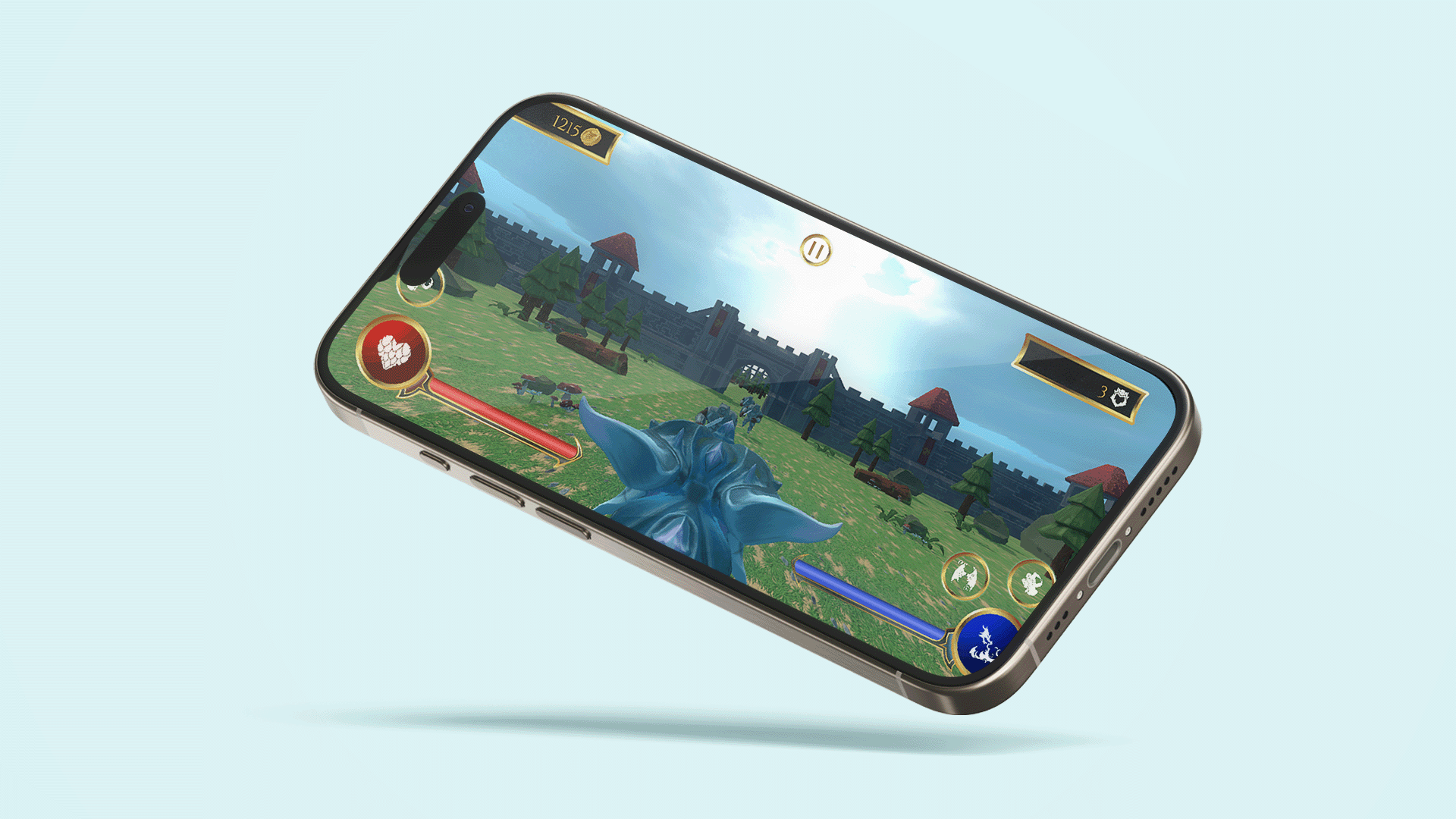
Hands Off My Hoard is a mobile roguelike where you play a dragon defending its treasure from waves of adventurers who came to take it. It was a team project, and I joined as the gameplay and systems designer. I didn't build the core dragon controls; those belonged to a teammate, and my part there was testing and polishing them. What I owned was everything built on top of them: the roguelike loop, the progression, the shop, the enemies, and the moment-to-moment feel.
That division put me on the part of a roguelike that actually decides whether it's any good. A roguelike doesn't live on its controls. It lives on build diversity, the number of different ways a player can put a run together and how many of them feel worth finding. My whole job was to make a game players would want to break.
The Run
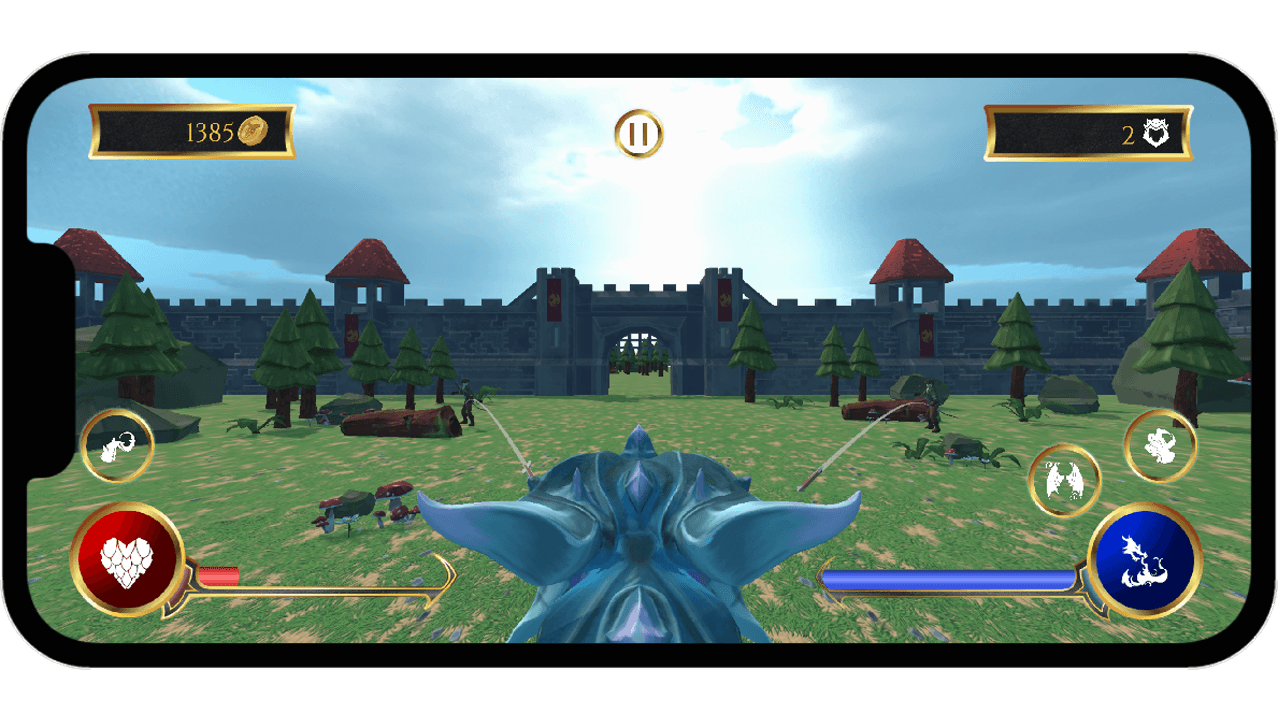
The game moves in two beats: you fight, then you shop. Each fight happens in its own scene we called a round, and every round the game picks a random weather preset and a random army name, so each one reads like a different battle in some long, documented war. That framing pays off over time. The longer you survive, the more each field fills with the wreckage of what you've killed, until a quiet green meadow has become a castle graveyard. Your progress is something you can see in the world, not just a number climbing in the corner. Few things communicate a power curve as honestly as property damage.
Inside a round, enemies arrive in waves, around three per round, and I tuned the curve for how many spawn and how long you get to breathe between them. Three types carry the fights, built on a loose version of orthogonal unit design: each one threatens along an axis the others don't touch. Knights charge straight at you and demand a fast answer. Archers take tactical positions and pepper you from range. Wizards are slower archers that hit harder. Because each asks a different question, every wave becomes a small prioritization puzzle rather than a damage check.
Letting Players Break The Game
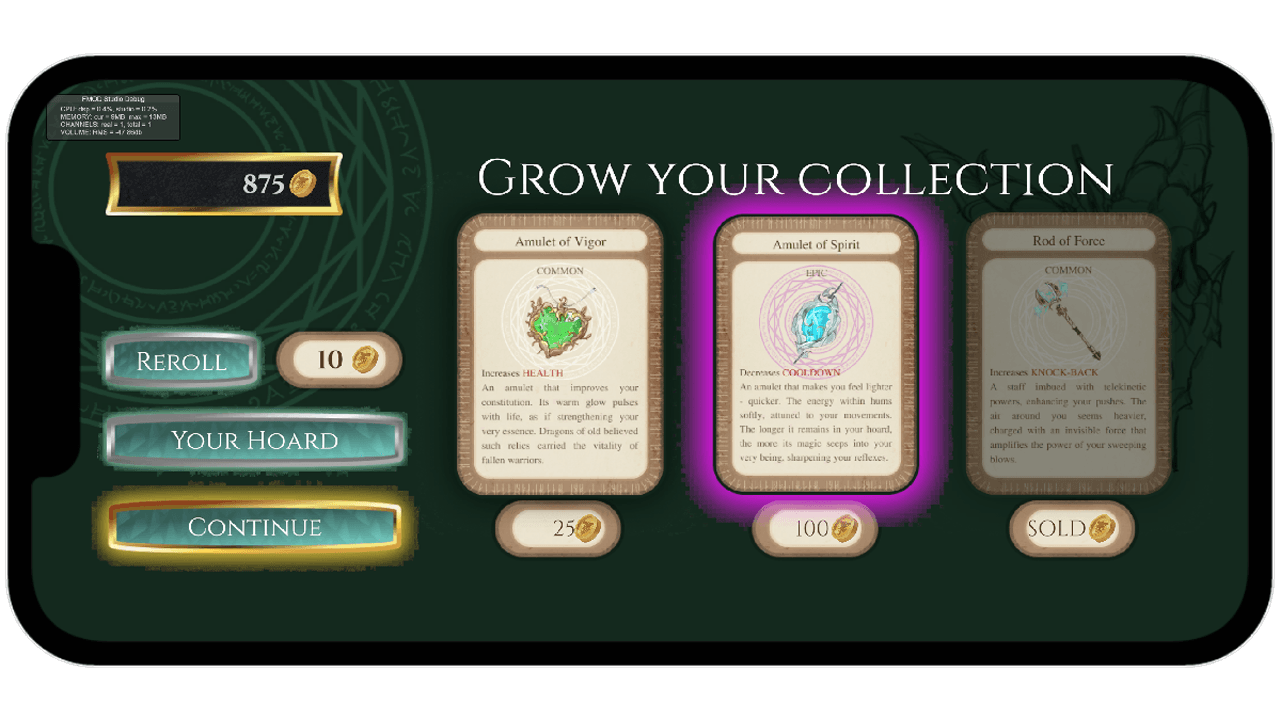
Every enemy you kill drops coins, and coins are the whole economy. Between rounds the shop shows three items, with the option to spend a little extra to reroll for a fresh three. Behind that plain screen sat fifty to sixty items across four qualities: common, rare, epic, and legendary. The first three tiers are vertical progression, mostly the same items at stronger numbers, the steady power you buy to keep pace with the difficulty curve. The legendaries are horizontal: unique abilities and modifiers that hand you new verbs instead of bigger numbers, changing how the game plays rather than how hard you hit.
The best of them belong to sets. Complete a set and you unlock synergies, combinations strong enough to bend a whole run around them. That was deliberate, and it's the part I care most about. Build diversity is the heart of a roguelike, so the design has to reward a player for spotting a combo and committing to it. This is second-order design in practice: I don't author the builds, I author the pieces and the incentives, and the player authors the build. The goal was never to hand players the strongest option. It was to give them enough interesting pieces that they'd find a broken one on their own and feel clever for it. A player who discovers a synergy you never spelled out is a player who owns their run.
Bringing It To Life
On the technical side, I built the systems that ran all of this: the progression curves, the enemy behaviors, the shop, and the persistence that remembered your items as the game moved between scenes. The enemy AI is honest about being simple. Knights move toward you. Archers claim an open spot from a set of priority positions and start firing once they arrive. But simple behavior can still look sharp, and the piece I'm proudest of there is the arrow trajectory: the shots follow a true ballistic arc with a trail behind them, which reads as far more alive than a straight line ever would.
The game feel, the thing designers half-jokingly call juice, was mine too. The dragon and its parts, the tail, wings, claws, and head, are the most detailed and the brightest things on screen, a deliberate value hierarchy so your own character always reads as the star of the fight. I worked with the artists toward a look that feels like a game you loved as a kid, that slightly old vibe, running on modern tech: better post-processing, cleaner materials, detail where it earns its place. And it had to perform, since this was mobile. We held a frame budget of 80 frames per second on target hardware and hit it.
Enemy placement was a design layer of its own, tuned so you could always pick your targets out against the environment. Once weather entered the picture, that turned involved enough to deserve its own short write-up.
Conclusion
Hands Off My Hoard is where I learned that systems are a kind of design you can't fake. A shop, a progression curve, and a loot table sound simple until they all have to talk to each other and stay fun across a hundred runs. Getting there meant building things robust enough to survive constant iteration and honest enough that a player could feel the logic underneath them. It's the project that made me want to keep designing systems, the kind a player can take apart and rebuild into something I never planned for.