Bugaboo Planet: Making the Game Teach Itself
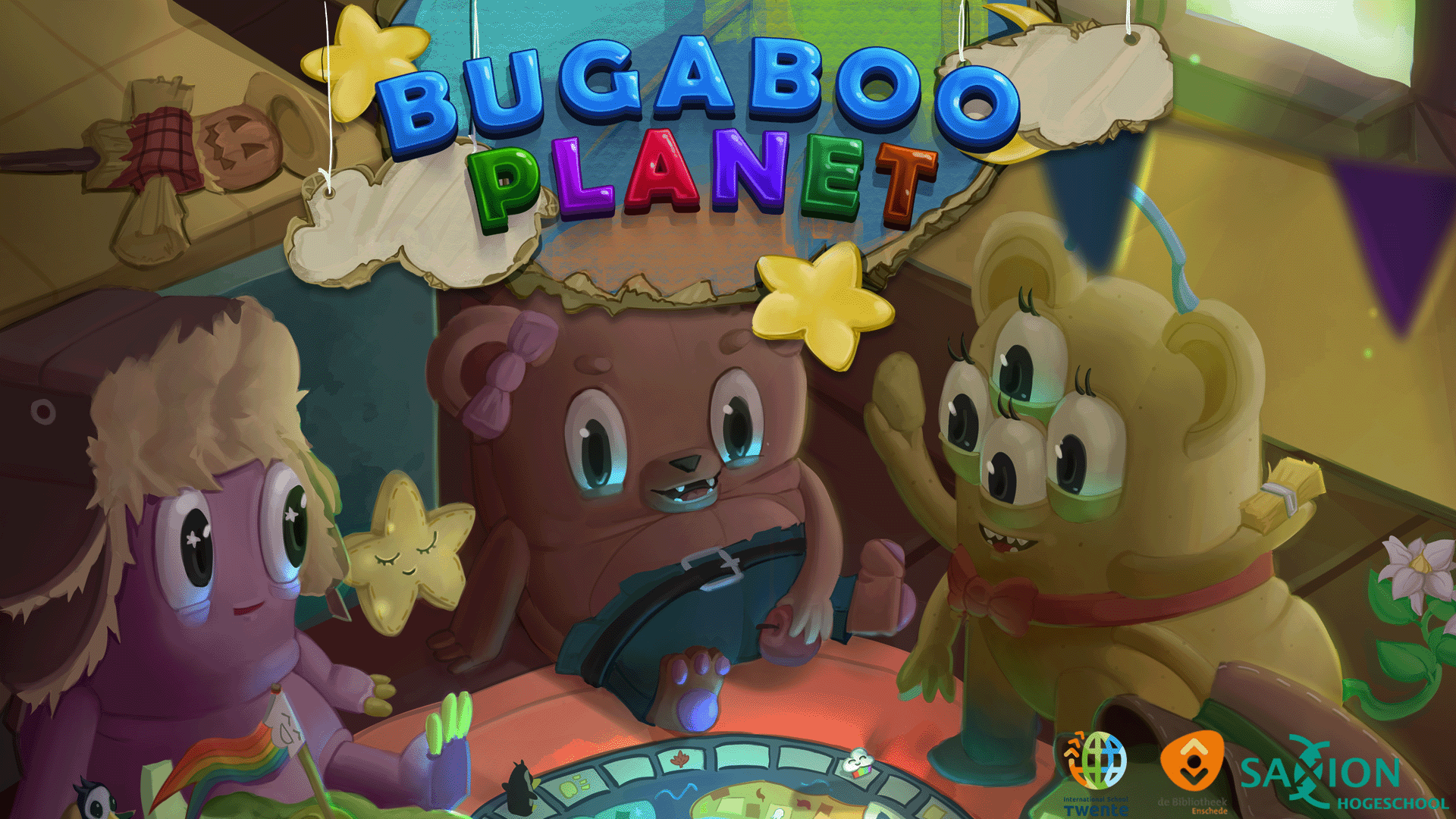
Bugaboo Planet was built for the Monster Project 2025, a collaboration between Saxion and the Library of Enschede. Children from a local class drew their own monsters, and each student team turned those drawings into a small playable game, shown at a public exhibition in the library. I was the lead designer on our team, responsible for the mechanics, the balancing, some of the Unity implementation, and a good share of the level design and playtesting.
The brief was deceptively difficult. Our players would be as young as six, playing at a kiosk in a busy room, usually with no adult guiding them. For some of them, this would be the first video game they had ever touched. That one fact decided almost everything that followed. If a player can't be expected to read, and has never learned how games normally work, then the game has to teach itself before it gets boring. Designers call this discipline onboarding; at a public kiosk with a six-year-old at the controls, it's closer to a survival skill. Every rule, every goal, every bit of danger had to land without a word of explanation.
The Planet That Has to Sell Itself
Before the game can teach anyone anything, it has to convince a child to walk over in the first place. We knew very early on that at an exhibition you're competing with the whole room, so the main menu had to do more than sit there waiting to be clicked.
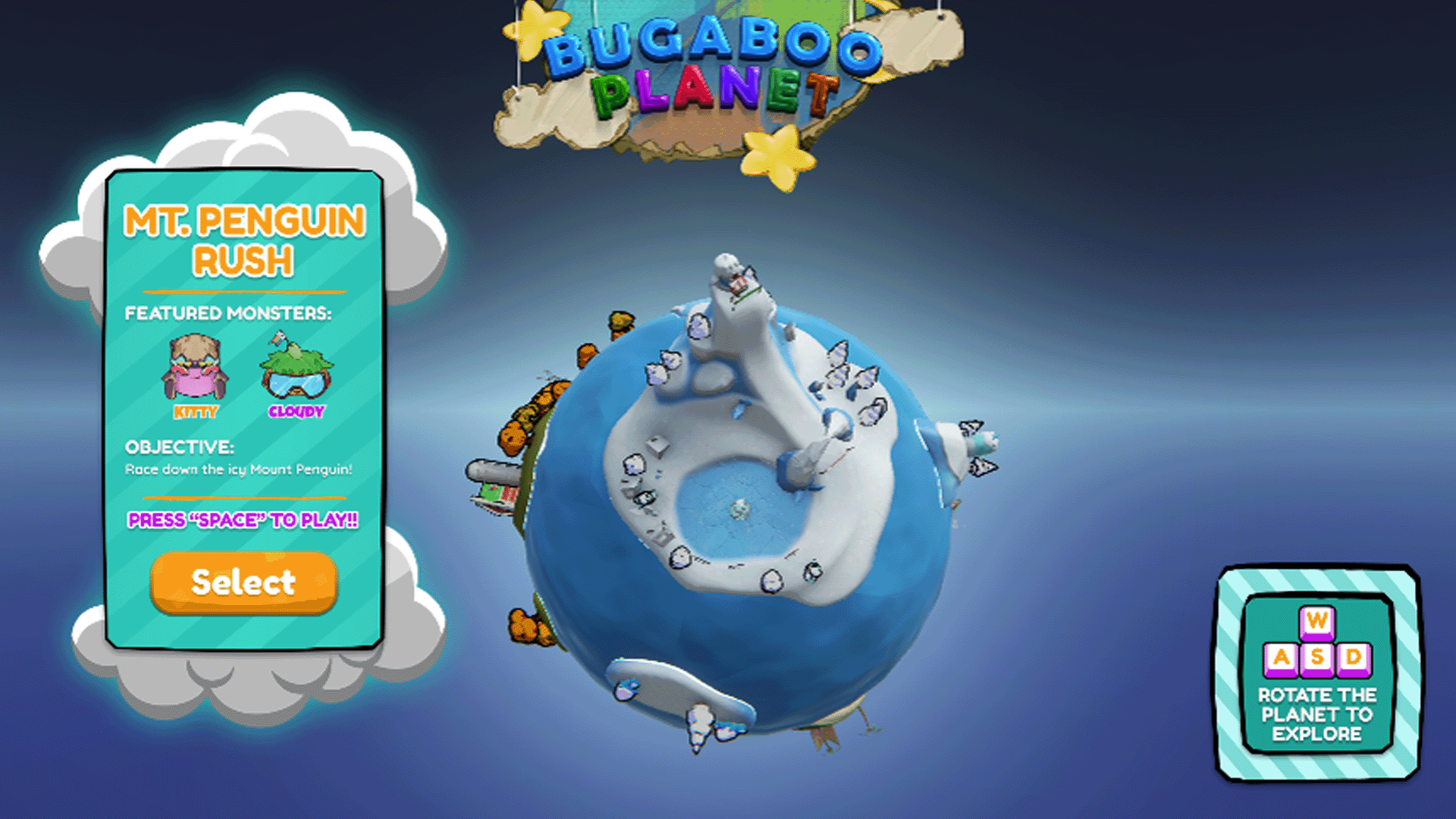
Arcade cabinets solved this problem forty years ago with attract mode, the machine playing itself to pull a crowd, so we stole it. The menu is the planet itself: a small colorful world, biomes and monsters on display, spinning on its own when nobody is playing, with animation and music running in the background. Motion and colour catch a passing kid's eye from across the room. Once they're at the kiosk, they rotate the planet to explore it, each island holding a monster and its minigame. A snapping camera centers the nearest island so no one gets lost spinning around, and a simple popup invites them to start. The whole thing runs on two or three buttons. A six-year-old had to be able to drive it on instinct, and it had to recruit that six-year-old before any of the design underneath it ever got a chance to matter.
No Words, and No Head Start
This is where the project got hard, and where I'm proudest of what we did. It wasn't only that our players couldn't read instructions. Many of them had never played a game, which meant they didn't arrive with the visual grammar experienced players take for granted. Red as danger, acceleration as rising pressure, a finish line as a thing you race toward: all of that is learned convention, built up over years of media exposure, and our players hadn't started the course yet. We couldn't lean on a single inherited signifier. The colours, the silhouettes of the monsters and the hazards, the sounds, and the mechanics themselves all had to carry meaning a child could feel on the first try.
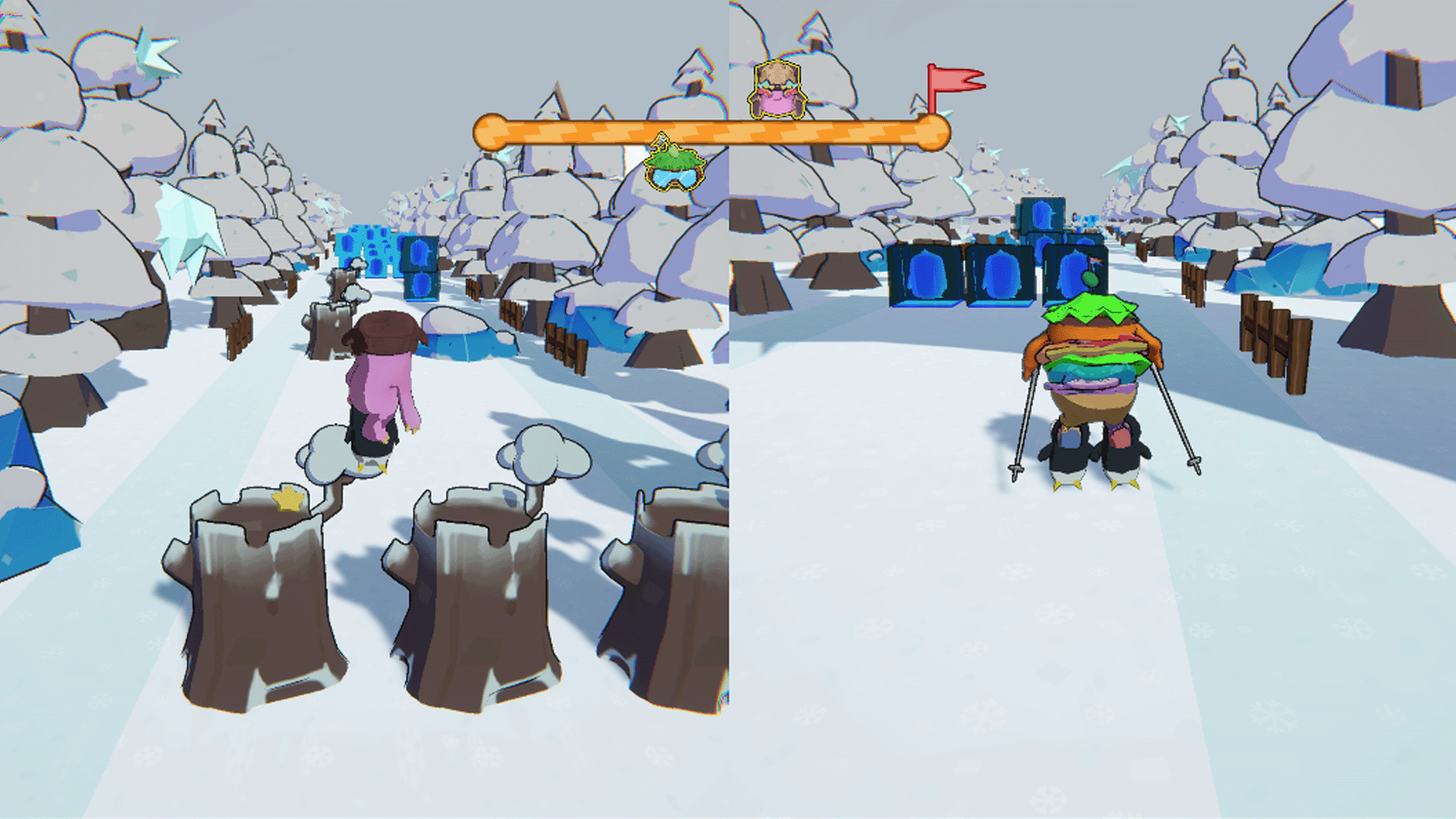
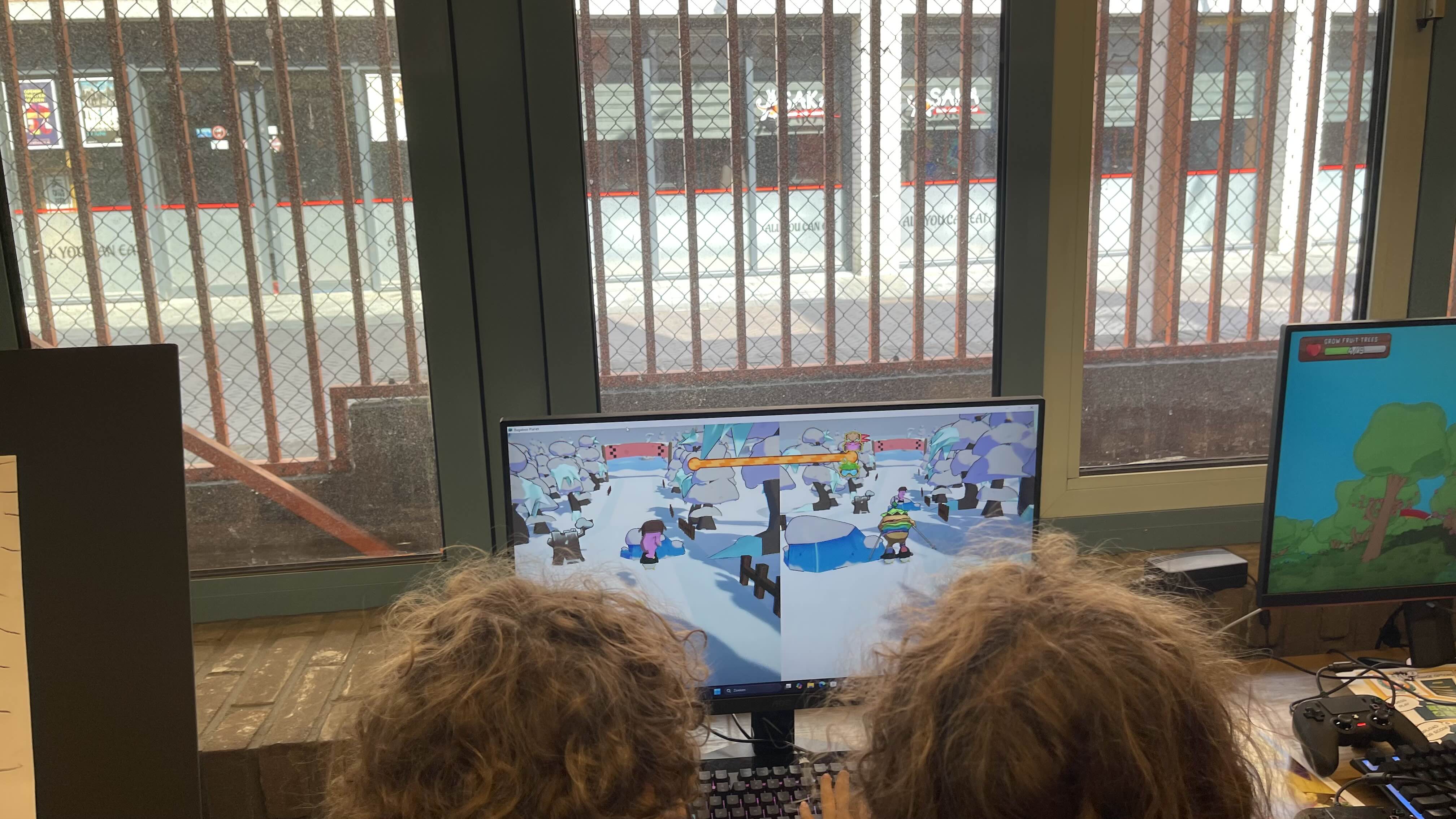
The clearest example I think is the skiing game, Penguin Rush. It began as a flat slalom through mountain obstacles, but that raised a question we couldn't really answer: how do you tell a kid, or how do you make them feel, that the game gets faster and tenser the further they go? You can't, with words at least. A hill can. Gravity is one of the few affordances a six-year-old brings to the table for free. Down means faster, and faster means the stakes are rising, so the slope carries the entire pacing curve on its own. The level became its own tutorial.
When a mechanic still had to be explained or translated, we made it something you could see instead of read. In Garden Guardians, you restock your fruit ammo by moving to the edge of your lane, but kids who heard that once would forget it, run dry, and get frustrated. We tested two versions against the toughest QA panel I've ever worked with, a classroom of six-year-olds: one where the ammo basket just sat there, and one where it flashes when you're nearly out. The flash won in a landslide. It's a textbook signifier, and the kids treated it like one: noticed it, understood it, refilled, no text required. The same fix solved a problem in Penguin Rush, where a slow zone along the track edges looked identical to the normal ground, so hitting it felt unfair. Giving it an icy blue texture made it read at a glance as different ground to avoid, hazard communication with zero words spent. Both times, we swapped an instruction for something visible.
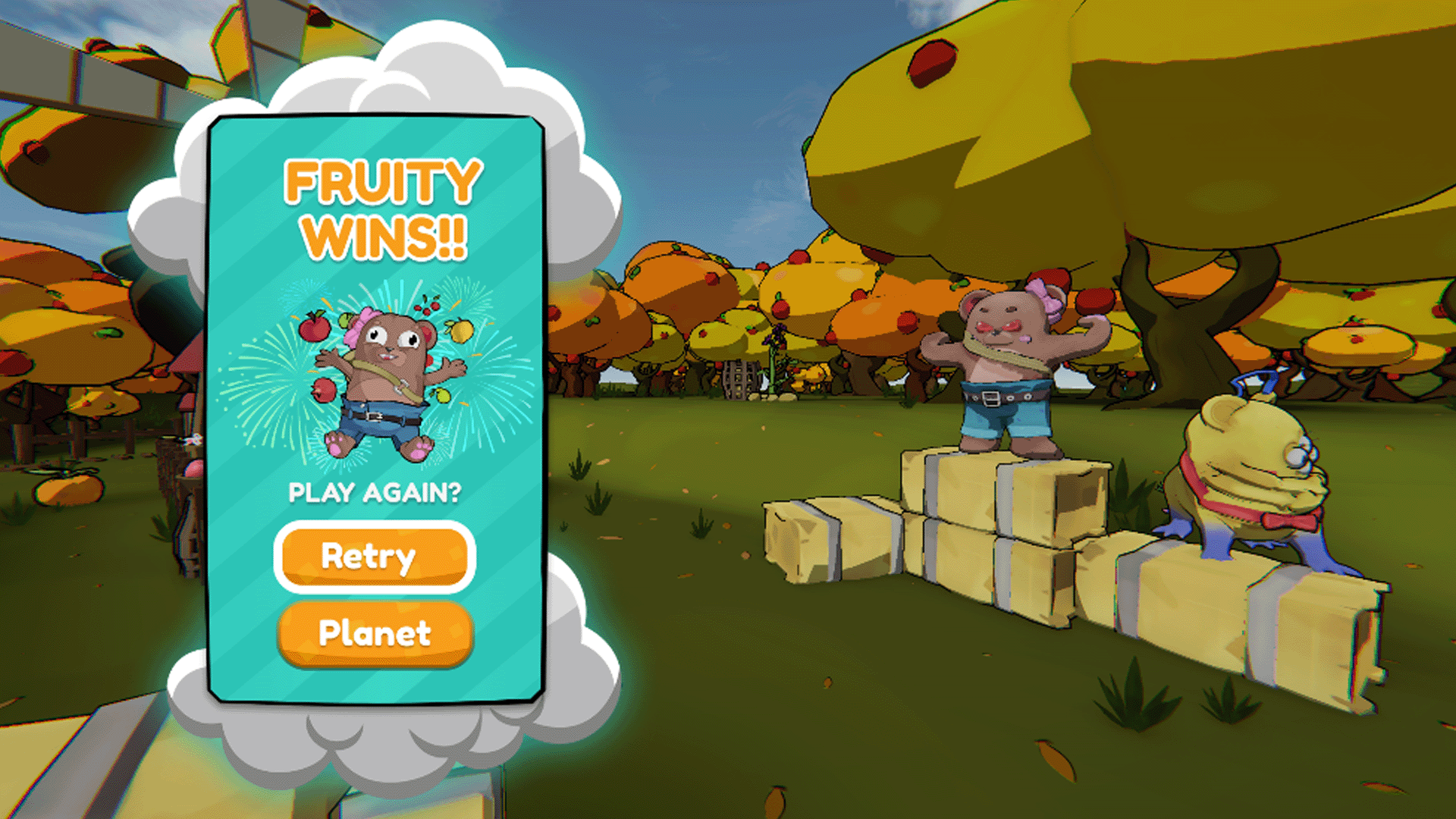
Stakes were the last thing to teach, and emotion did it better than any rule could. Kids turned out to be competitive by nature; we saw it in the very first kindergarten playtest, where they lined up to play again and again trying to beat each other. So we leaned more into it, designed toward the rematch. We made the winning character pose for the camera, flex and celebrate, to make the kids feel victorious, and the pose plays to the queue too: the kid watching over a shoulder is the next player. Of course, there came the problem of not making the losing kid feel bad, but the tone was light enough to avoid it.
Underneath all of this, we kept the early difficulty gentle and let each game ramp toward the end. That gave kids room to learn the controls by playing, before the game asked anything difficult of them. Children are smart and adapt surprisingly fast, and we saw plenty of proof of that, but we didn't want to risk a kid's first-ever game being a frustrating one. We eased them in, then raised the challenge once they're ready.
Designing for Players Who Can't Meet You Halfway
I would say Bugaboo Planet taught me how to design for players who can't meet you halfway. No reading, no gaming literacy, no one standing by to help. Every assumption a designer would normally make about a player, we had to either earn or build into the game itself. Personally, it pushed me to make more deliberate design decisions, because the game had to hold the whole conversation with the player on its own, and get it right on the first try. That's a good problem to run into early, since some version of it shows up with every player who quits before they reach the part you were proudest of.